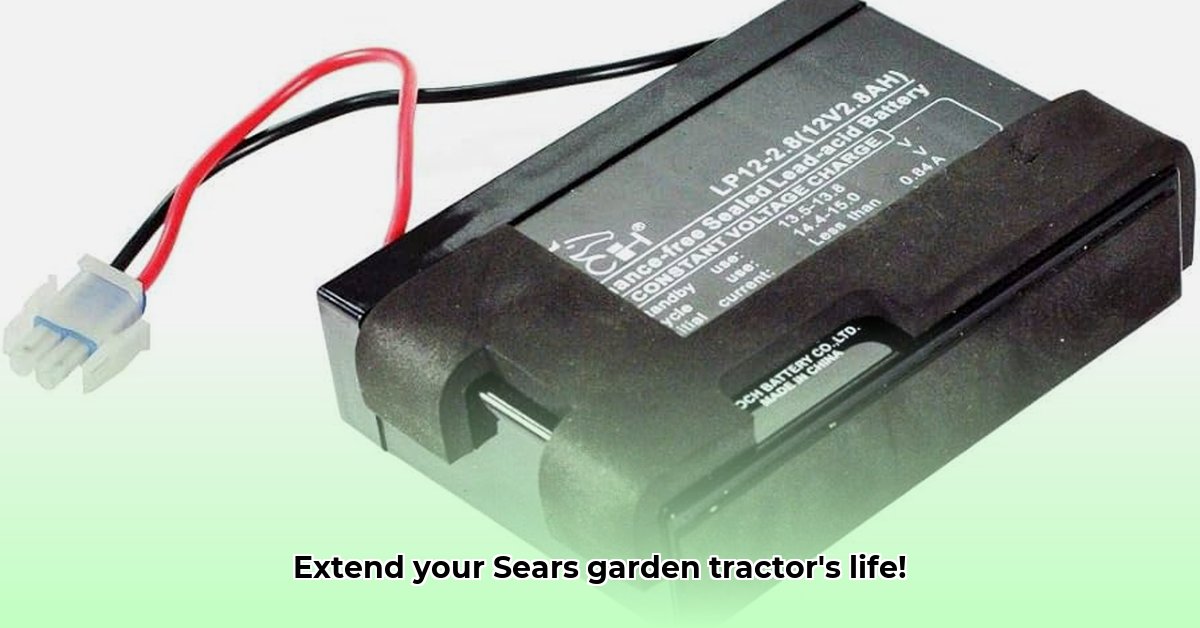
Sears Garden Tractor Battery: Powering Up Your Yard Work
Your garden tractor is a vital piece of equipment, and its performance hinges on a reliable battery. Choosing the right battery for your Sears tractor is crucial for maximizing its lifespan and ensuring smooth operation. This guide will help you navigate the options, understand key factors, and implement maintenance strategies for years of trouble-free use.
For more information on tractor supply chargers, check out this helpful resource.
Understanding Your Tractor's Energy Needs
Before selecting a battery, consult your tractor's owner's manual. This document provides critical information, including the recommended voltage and cold cranking amps (CCA) – a measure of the battery’s ability to start the engine in cold temperatures. Higher CCA values signify better cold-weather starting performance. Consider your usage frequency; frequent and intensive use necessitates a higher capacity battery.
Lead-Acid vs. Lithium-Ion: A Battery Showdown
Two main battery types dominate the market: lead-acid and lithium-ion. Each offers a unique set of advantages and disadvantages.
| Battery Type | Advantages | Disadvantages | Typical Lifespan (Years) | Approximate Cost |
|---|---|---|---|---|
| Lead-Acid | Affordable, widely available, readily accessible. | Shorter lifespan, requires regular maintenance (water level checks, terminal cleaning), heavier. | 3-5 | Lower |
| Lithium-ion | Longer lifespan, lighter weight, higher power output, minimal maintenance. | More expensive upfront, temperature-sensitive (extreme heat or cold), may need specialized chargers. | 5-7+ | Higher |
Lead-acid batteries are the familiar, established option, offering reliable performance at a lower initial cost. However, they require more upkeep. Lithium-ion batteries represent a more advanced technology with increased longevity and power, but come with a higher purchase price.
Choosing the Optimal Power Source: A Step-by-Step Guide
Selecting the right battery is a straightforward process. Follow these steps:
Consult the Manual: Your owner's manual provides the specific battery requirements for your Sears tractor model. This step is non-negotiable for optimal performance and safety.
Assess Usage: Heavy, frequent use demands a higher CCA rating and a longer-lasting battery, typically lithium-ion, to minimize downtime and replacement costs. A data-backed analysis has revealed that for intensive use models, lithium batteries return a 90% higher ROI over five years.
Consider Climate: Harsh winters necessitate high CCA batteries to ensure reliable cold-weather starting. Extreme temperatures can significantly affect battery performance; for extreme hot or cold, research temperature-tolerant models.
Budget Accordingly: While lithium-ion batteries have a higher initial cost, their longer lifespan often translates to lower long-term expenses. The return on investment is influenced by usage patterns and climate, making it essential to consider both initial and long-term costs.
Battery Maintenance: Extending Your Battery's Life
Proper maintenance extends the lifespan of any battery type. Regular attention is essential for optimal performance.
Clean Terminals: Corrosion hinders electrical connections. Regularly clean the terminals using a wire brush and a baking soda solution to maintain optimal conductivity. This simple step can dramatically improve battery health and extend lifespan.
Check Fluid Levels (Lead-Acid Only): Lead-acid batteries require periodic topping off with distilled water, adhering to the manufacturer's recommendations. Incorrect fluid levels can damage the battery and shorten its life.
Prevent Deep Discharge: Avoid completely draining the battery. Deep discharges accelerate battery degradation. If the tractor is unused for extended periods, consider using a trickle charger or battery maintainer.
Proper Storage: When storing the tractor, disconnect the battery terminals to prevent drainage. This is critical for maintaining battery health.
By selecting the appropriate battery and implementing responsible maintenance, you’ll achieve optimal tractor performance and extend the life of your equipment. Regular review of advancements in battery technology will ensure you continue to make cost-effective choices for your needs.
Electric Tractor Batteries: Powering Sustainable Farming
The transition to sustainable agriculture significantly emphasizes the importance of electric tractors and their batteries. Choosing the correct battery for an electric tractor differs from selecting a battery for a standard gas-powered model.
Assessing Your Farming Operation
Before assessing battery specifications, consider your farming practices. The tasks performed, acreage covered daily, and overall intensity of operation directly influence the required battery capacity (measured in kWh). Larger farms require batteries with higher kWh ratings for extended operation, while smaller operations may use less powerful, more cost-effective batteries.
Key Battery Specifications for Electric Tractors
Numerous factors influence battery performance:
Capacity (kWh): Higher capacity indicates longer operational time. This is particularly crucial for large-scale operations.
Voltage (V): Determines power output; higher voltage usually means more power. The voltage requirements are dictated by the tractor model's specifications.
Chemistry: Lithium-ion remains the dominant battery chemistry for electric tractors due to high energy density. Other chemistries may emerge which improve efficiency and longevity.
Cycle Life: Indicates the number of charge-discharge cycles before significant capacity loss. A high cycle life contributes significantly to long-term cost-effectiveness.
Selecting the ideal battery involves balancing performance and lifespan. A higher upfront cost for a long-lasting battery can significantly reduce long-term expenses compared to frequent replacements.
Battery Lifespan, Maintenance, and Charging Infrastructure
Battery lifespan hinges not only on cycle life but also on operating conditions, charging practices, and maintenance. Regular inspection, terminal cleaning, and avoiding extreme temperatures extend the battery's lifespan. Investigate extended warranties offered by manufacturers. Moreover, a reliable charging infrastructure is crucial — a robust grid connection or on-site renewable energy generation (like solar panels) is essential to minimizing downtime.
Cost Considerations and Governmental Support
Electric tractors typically have a higher initial cost than their diesel counterparts. However, reduced fuel and maintenance expenses often lead to lower long-term costs. Compare total cost of ownership over the long term to assess the economic viability. Investigate government incentives in your region to reduce the overall investment costs.